08 October 2026
Spring, TX Confidence for Life: condition1combat.com martial arts
Presented by @zaneleco944
Confidence is not a switch you flip. It is a skill you see details build the way you develop balance on a bicycle, with a few wobbles, lots of practice, and the right coach at your side. In Spring, TX, the pace of family life, demanding careers, and long commutes can shrink the margin for personal growth. That is where a focused training environment helps. A well run school turns a few hours per week into steady progress that shows up in daily life. You carry groceries without the back twinge that used to nag you. You speak up at work. Your kid starts making eye contact and shaking hands without being prompted. Those are not accidents, they are trained outcomes.
The team behind condition1combat.com understands this trajectory. The site is the front door for Condition 1 Combat Center martial arts, and it points toward programs designed to make confidence a habit. You will see options for kids martial arts and adult martial arts training, along with self defense classes tuned to real situations people in our area face. The goal is not just to sweat. It is to become more capable under pressure while staying safe and respectful on and off the mats.
Why a Spring, TX family chooses a mat over another screen
Parents in Spring juggle school schedules, youth sports, and Houston traffic. By the time dinner is cleared, energy is thin and screens are easy. The tradeoff feels harmless at first. Then you notice the subtle slide. Shorter attention spans. Hunched shoulders. More second guessing.
Martial arts solves a specific set of modern problems in a clean, tangible way. You learn to manage stress, hold posture against resistance, and communicate with clarity even when your heart rate spikes. Good instructors connect those physical habits to everyday situations. That is why a quiet 8 year old starts raising a hand in class. That is why an engineer who has not run since college sprints up a set of stairs without stopping for breath and realizes the back pain faded months ago.
When I first walked two brothers, ages 7 and 10, into a beginner class, I watched how they reacted to structure. The warm up had simple movement tasks, forward rolls, base to stand, partner grips. After eight sessions, the younger one had stopped flinching when bumped. After twelve, the older one stepped between a friend and a class clown at recess and used a calm voice that settled the whole group. No fights, no posture. Just a practiced skill: projecting control without aggression.
What to expect from condition1combat.com martial arts classes
The website serves as a straightforward guide. You can explore class categories, check schedules, and request a trial. Programs typically include Condition 1 Combat Center kids martial arts for younger students, teen groups, and Condition 1 Combat Center adult martial arts training for complete beginners through advanced practitioners. Self defense classes at condition1combat.com often run as workshops or folded into weekly training so you build reflexes over time.
A strong school does not try to be everything to everyone. It selects a core set of skills and trains them deeply. In practical terms, that means you will spend time on fundamentals that hold up across styles: posture, frames, footwork, distance management, grip fighting, and timing. Whether your goal is general fitness, practical self defense, or competition, the base curriculum keeps you safe, developing, and engaged.
The real engine of confidence in a high quality program
Confidence comes from doing hard things safely and repeatedly until your nervous system stops throwing alarms. You cannot fake this with slogans or a motivational poster. It requires a training design that nudges you just outside your comfort zone, then brings you back to baseline so you can absorb the lesson.
Here is what consistently moves the needle inside well run martial arts classes at places like Condition 1 Combat Center:
- Clear progression: visible steps from beginner skills to intermediate combinations, with feedback at each stage.
- Alive training: controlled resistance from partners so techniques work on people who are trying to stop you.
- Psychological framing: breathing tools, cue words, and routines that bring heart rate and focus down quickly.
- Culture of respect: partners keep each other safe, coaches model calm under stress, and boundaries are non negotiable.
- Consistent measurement: attendance streaks, technique checklists, and simple fitness benchmarks to mark real progress.
Notice the absence of shortcuts. Belt color matters less than the way you manage a difficult round with a bigger partner, or how you hold posture during a tense drill. That is the point. The habits transfer.
Self defense classes built for real life
Self defense training has to meet reality head on. In Spring and the greater Houston area, that can mean late evening parking lots, crowded events, or getting turned around in unfamiliar neighborhoods after a rainstorm knocks out traffic lights. Condition1combat.com self defense classes are designed to simplify choices under pressure.
Expect scenario based training where you practice with verbal boundaries, a strong stance, and exit strategies. You will cover common grabs, clinch breaks, and ground positions that improve your odds of getting back to your feet fast. Instructors will talk through legal and ethical considerations, because a smart student knows when to disengage, when to call for help, and what to say if a situation escalates.
De escalation is not just a chapter in a manual. It is a physical skill. Voice projection, eye contact, hand position that looks nonthreatening but gives you a strong frame, these are details you will rehearse. Add in environmental awareness, like how to post a free hand on a car hood if pushed, or how to corner your attacker on the inside of a door frame to simplify angles. Good training makes these moves feel obvious later.
Kids martial arts that grow character without losing the fun
Parents often ask if a child is ready for structured training. The better question is how the program adapts to the child. Kids do not all arrive with the same coordination or attention span. The right class uses small, specific victories to build momentum: a perfect technical stand up, a well timed sprawl, a respectful bow and handshake before and after practice.
Condition 1 Combat Center kids martial arts focuses on skills the school system values but cannot always teach through books. Think impulse control, task switching, and pattern recognition under time pressure. I like to track progress in 6 to 8 week blocks. Over that span, you tend to see:
- More consistent listening, because coaches bake short response windows into drills.
- Better lateral movement, which reduces tripping and awkward falls on the playground.
- Fewer complaints at home about chores, since habits formed in class, like putting gear away, spill over.
- Healthy boundaries with peers, especially during unstructured recess where kids test each other.
When kids add sparring or live grappling, the program paces it. Short rounds, clear stop words, and a focus on alignment rather than strength. A ten year old who learns to breathe and keep posture while pinned for 15 seconds quietly rewires their stress response. Bullying loses some of its sting when your body has solved harder puzzles already.
You will sometimes hear parents worry that martial arts will make a child more aggressive. In a well monitored environment, the opposite happens. Kids vent energy in a structured way and learn that roughhousing without consent is not acceptable. They learn to read faces, ask permission, and check on a partner after a hard scramble. That social maturity pays off in school and on teams.
Adult martial arts training that fits a real calendar
Adults have three constraints: time, recovery, and pride. The first two are negotiable, the last one can derail progress fast. Beginners at any age are welcome in condition1combat.com adult martial arts training. Coaches expect a learning curve. Good programs protect joints, warm up intelligently, and scale intensity. You will leave class tired and calm, not broken.
A simple framework for adult progress looks like this:
Week 1 to 3: Build attendance and vocabulary. Learn how classes start, how to tap early, how to hold frames, and how to breathe through your nose during effort. Expect awkwardness. It fades.
Month 2 to 3: Pattern recognition. You start chaining two or three moves. Guard retention, basic takedown defense, or a balanced stance with a jab that protects your chin. You notice that a 5 minute round feels shorter.
Month 4 to 6: Your game emerges. You lean into a preferred guard, or a clinch series, or a set of counters that fit your body type. Strength moves to the background. Timing and posture do more of the work.

The physical changes sneak up. Two to three sessions per week adds up to 100 to 300 purposeful bouts of effort per month if you include warm ups, partner drills, and live rounds. That is a lot of practice learning to calm down. Sleep tends to improve. Blood pressure often nudges downward. The afternoon slump loses its punch.
Safety, coaching quality, and the culture that keeps you coming back
Technique is teachable. Culture is the hard part. Condition 1 Combat Center martial arts keeps a clean line on expectations. That starts with coaches who can demonstrate slowly, give concise cues, and adjust for different body types. On the safety side, you should see structured warm ups that mobilize hips and shoulders, and drills that build progressively toward live work.
White board lesson plans or verbal outlines are common in professional programs so you know what the night’s focus is. Coaches circle, correct quietly, and praise specific details. If someone rolls too hard with a new student, it gets addressed politely and directly. Respect trumps ego.
Injury prevention is not complicated. It is a set of daily habits. Tuck your chin during breakfalls, keep your spine long while seated, tap to joint locks before the stretch, not after. New students sometimes believe that tapping is failure. Trained adults know tapping shows control and care for long term development. You get many rounds by tapping early. You get fewer rounds by clinging to one.
A look inside a typical, well structured class
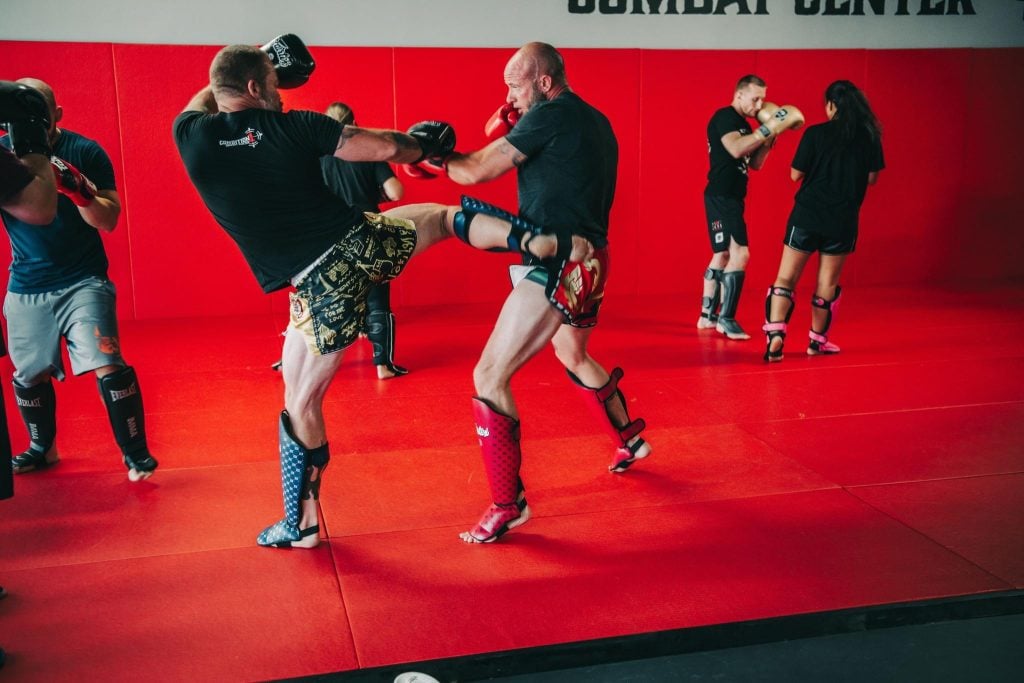
Every school has its rhythm. At many reputable Spring programs, including Condition 1 Combat Center, a class often follows a pattern that balances skill building and conditioning without wasting minutes.
The warm up is not a random jog. You will mobilize the joints you plan to load. Hip escapes get your spine and hips moving. Shoulder rolls and scapular pushups prepare you for frames and posting. If striking is on the menu, you will groove footwork and hand position before anyone throws a live punch.
The technical block introduces one to three connected ideas. A takedown that flows into side control, a guard pass with two branches, or a jab feint into a cross with a footwork exit. Partners switch often so you learn to adjust to different builds.
Drilling starts cooperative, then adds resistance. Beginner drills at 20 to 40 percent resistance build reflexes without panic. As you learn to maintain posture and frames, resistance climbs. Live rounds cap the session, often with positional constraints so beginners are not drowning in options.
Cool downs matter in the Houston climate. A few minutes of controlled breathing, ankle and hip mobility, and light core bracing sets you up to recover in the heat and humidity. You leave more relaxed than when you walked in.
Starting smart in the Gulf Coast climate
Spring and summer in our area run hot and humid. That affects training in real ways. Hydrate early and often. Aim for a glass of water per waking hour on training days, plus an extra glass 30 minutes before class. Post workout, salt your food a bit more than usual, as long as your doctor has not told you otherwise.
On gear, start simple. Clean, breathable clothing for your first trial, then follow coach guidance for discipline specific equipment. A mouthguard fits in most striking or clinch classes. If grappling is in the plan, trim nails short, bring a towel, and consider a light rashguard to reduce friction. Wash gear right away. Your training partners will thank you.
Recovery beats ambition over the long run. Two to three sessions per week outperforms five sessions blown up by an overuse injury and a month off. Sleep solves more plateaus than supplements. If you track heart rate variability, you will often see a dip after a hard session. Use that as a signal to prioritize a light walk or mobility the next day.
How to choose the right program on your first visit
New students often feel pressure to decide quickly. Slow down. A few targeted questions will tell you if a school fits your goals.
- How do you integrate beginners into classes with mixed experience levels?
- What are your safety protocols for live rounds and contact drills?
- How do you communicate progress for kids and adults, beyond belts?
- Do you offer flexible membership options for families or shift workers?
- Can I watch a class before joining, and is there a trial option?
A sincere, specific answer to each is a good sign. Vague or defensive answers are a yellow flag. If a coach lights up when describing how a shy student found their voice, you are in the right room.
Cost, contracts, and the real value of consistency
Parents and professionals ask about price first because budgets are real. In the Spring area, monthly memberships for reputable martial arts condition1combat.com programs often sit in a range that reflects coach experience, facility quality, and program depth. Some centers offer punch cards, family discounts, or employer partnerships. Ask, then weigh the value against your actual attendance. A slightly higher rate that motivates you to show up can be the better deal.
Beware of deals that look too generous up front then lock you into long contracts with tricky cancellation policies. Most serious schools believe their day to day value will keep you, not a fine print trap. If you are uncertain, ask for a month to month option for your first cycle. Build the habit, then commit when training has a firm spot in your week.
Competition paths vs self defense priorities
Not everyone wants to compete. You do not have to. That said, some adults and teens enjoy testing themselves in a structured environment. Tournaments teach composure. You learn to manage the nerves of stepping onto a mat, or into a ring, and performing on a clock. Coaches at places like Condition 1 Combat Center can help you prepare intelligently if that is part of your plan.
If your focus is strictly self defense, your training will tilt toward situational awareness, pre contact cues, preemptive positioning, and quick disengagement. You will still develop a technical base, but you will spend more time drilling from disadvantageous positions, dealing with grabs against walls, and working with verbal boundaries. Both paths build confidence. The difference is in the scenarios and rulesets you emphasize.
Digital resources help, but bodies learn best in person
You will find helpful articles and schedules at condition1combat.com. Watch short videos, read program descriptions, and plan your visit. Just remember that martial arts lives in your nervous system, not on a screen. The timing of a hip escape, the feel of a proper frame, or the angle on a foot sweep requires feedback from a live coach and a partner who does not move like a choreographed clip.
Use online material for review and to refresh terms. Let the mat time teach you the real lesson. You will be surprised how fast 10, 20, then 50 hours of guided practice change your baseline.
A 30 day plan for meaningful momentum
Starting is easier with a short, specific plan. Set two to three training days that you can protect. Tell a friend or family member your schedule so they can support it. Pack your bag the night before. In class, measure one thing you can control. For adults, count focused rounds completed. For kids, track on time starts and effort during drills.
By day 10, aim to know five core movements cold: base to stand, technical stand up, a solid guard posture or jab and retract, hip escape, and a safe breakfall. By day 20, add two escapes from bad positions and one combination you can perform under light resistance. By day 30, volunteer for at least one controlled live round per class and ask a coach for one targeted correction per session. That pattern builds a habit loop of attendance, action, and feedback.
The local ripple effect
The Spring community is full of first responders, teachers, nurses, and small business owners who already live at a higher baseline of responsibility. Many of them find that martial arts sharpens the edge they rely on. A firefighter told me he used the same box breathing we practiced between rounds to steady his hands before a door breach. A teacher said the boundaries we rehearsed in scenario drills helped de escalate a heated conversation with a parent after school.
Families feel it too. Siblings who train together argue less. Not because they never disagree, but because they have rehearsed respecting space and communicating under stress. When parents train alongside kids, the effect multiplies. A father who struggles with fitness can model persistence by showing up. A mother who has never thrown a punch can demonstrate that learning new skills is not reserved for youth.
Taking your next step with Condition 1 Combat Center
If you have read this far, you probably feel a tug. Visit condition1combat.com to explore class options, check schedules, and request a trial. You will find Condition 1 Combat Center martial arts classes for kids and adults, along with focused self defense sessions when you need a fast start. Use the site to plan, then walk into the building. Shake a coach’s hand. Watch a class. Ask a question from the list above. You will know quickly if the room feels right.
Confidence for life is a big promise, but it is earned in small, repeatable ways. A clean breakfall. A steady jab. A calm exhale when your heart rate spikes. Those skills add up. Spring, TX has plenty of places to spend an evening. Few will change how you carry yourself the way a well run mat room does. If you want that change, Condition 1 Combat Center, and the team behind condition1combat.com martial arts, are ready to help you build it.